
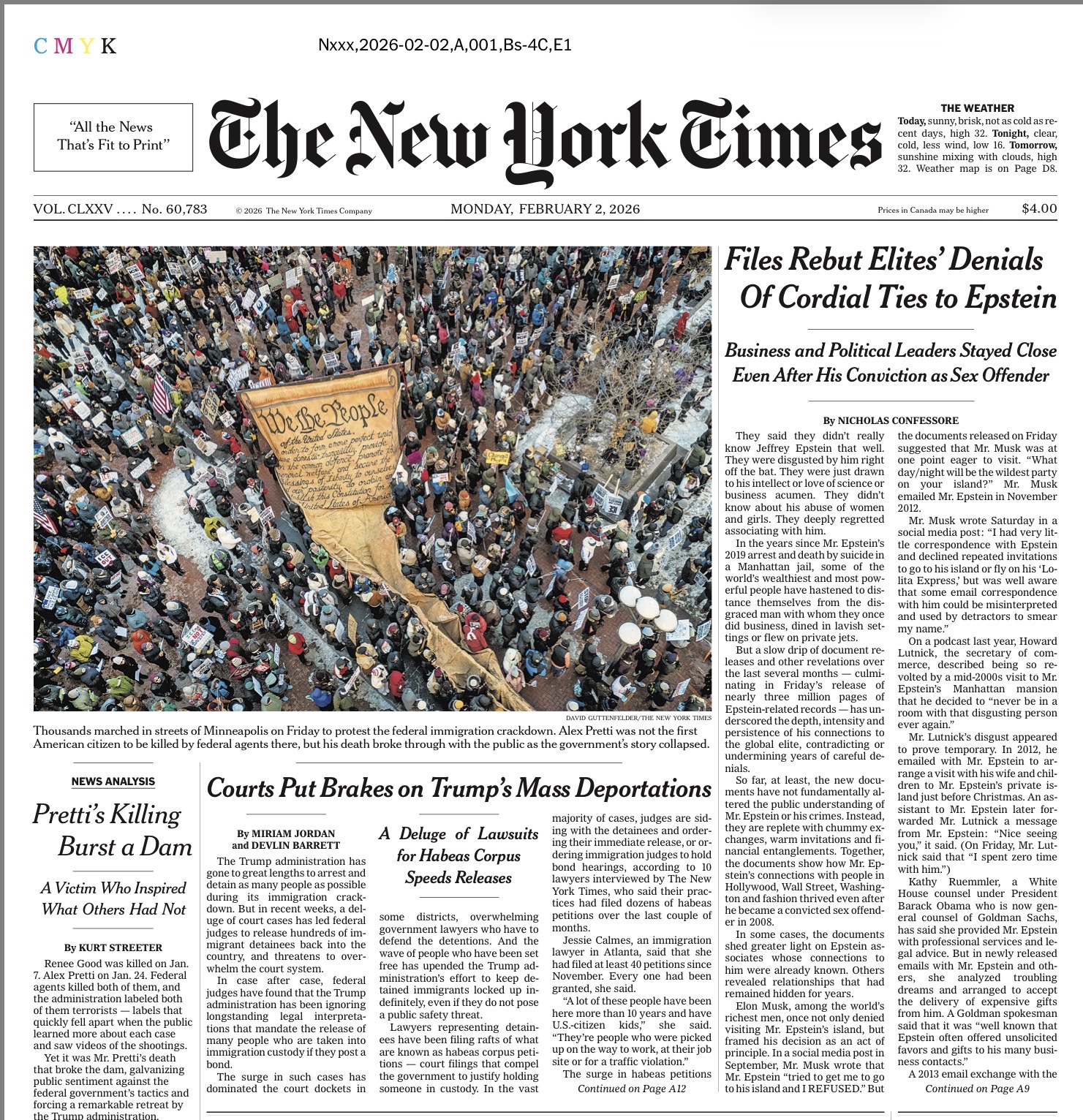
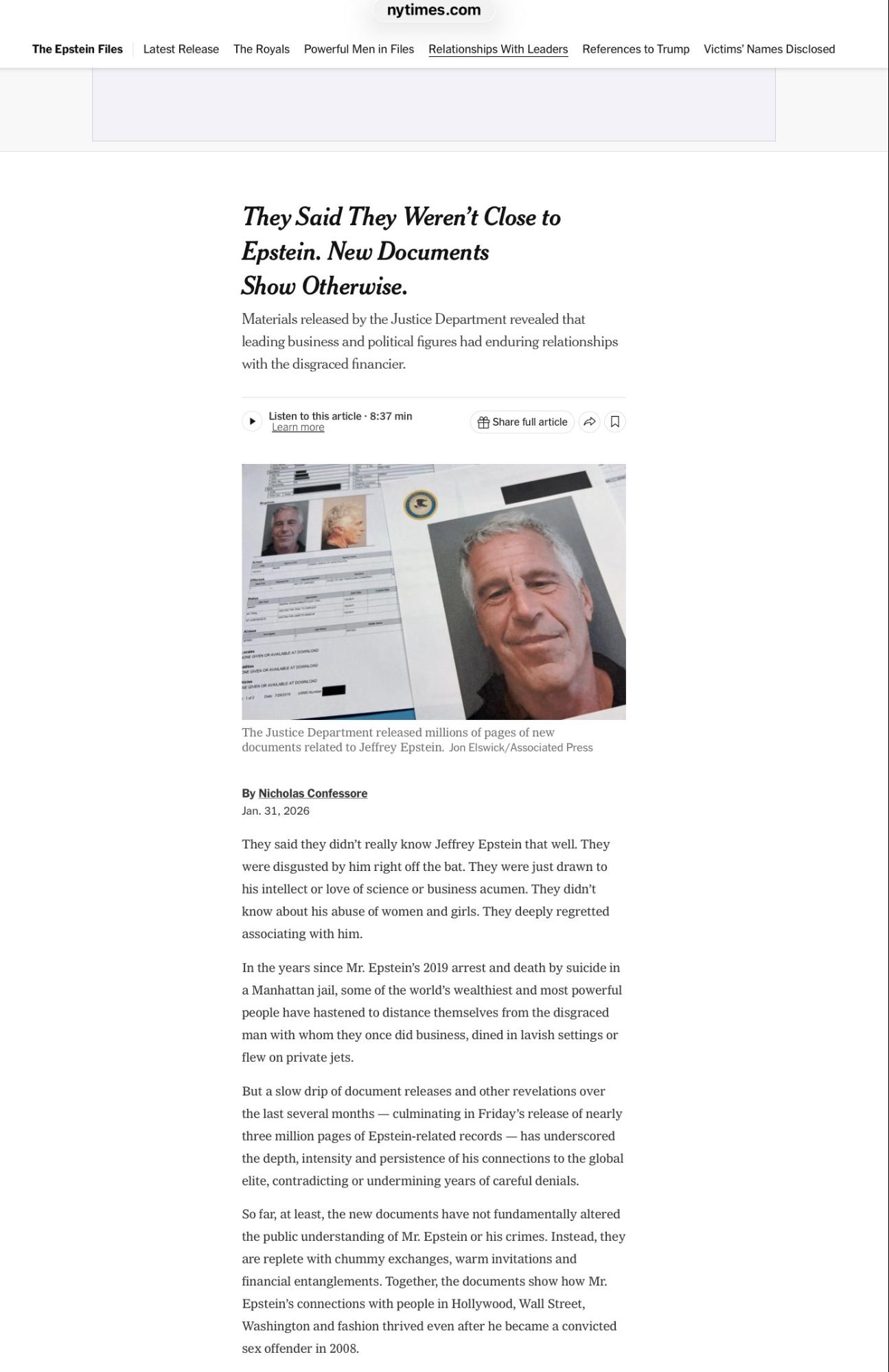
Note: Dr. Margolies sent in a letter to the Times on the day the article Files Rebut Elites’ Denials Of Cordial Ties to Epstein (original headline) was published, pointing out how most readers would interpret the headline and why that mattered. Following receipt of this letter, the headline of the article was changed to a more thoughtful one: They Said They Weren’t Close to Epstein, New Documents Show.
A New York Times article on Feb.2, 2026, Files Rebut Elites’ Denials Of Cordial Ties to Epstein (original headline), exposed newly released information from the Justice department linking powerful political and business figures to Jeffrey Epstein. The individuals named and discussed in the piece included wealthy elites from Trump’s camp including Musk, Lutnick, Theil and others.
However, looking at the headline, “Files Rebut Elites’ Denial of Cordial Ties to Epstein” how many readers would have guessed that? Given the current public discourse, most people likely assumed the article was referencing so-called liberal elites, given that the word “elite,” along with the word: “entitled” and other such words, has been hijacked to be a disparaging reference to liberals – as if liberals were the only ones who belong to a wealthy, high status, and influential group.
An argument can be made that using these kidnapped words correctly to re-label so-called conservatives (another misnomer) who have a disproportionate amount of money, power and influence can help reclaim their actual meaning and refute the exemption that Trump and others have wrongfully claimed. But, in this context, since many people these days read only the headlines or first sentence without reading the article, the risk is that readers are left with an incorrect message that perpetuates a consequential negative bias. I believe that being deliberate with language, and curious with people about the message they are communicating when they use certain words, is the foundation of impacting people’s minds and hearts in the way we intend.
See Related Article: “Pleasing” Is Not the Proper Word
Article with Original Headline:
Article with New Headline:


The Psychology of Narcissism Versus Healthy Self-Esteem